
Present Chinwe Onyebuchi
PJ Art Globe
Fabric is a living archive. Every thread carries memory, identity, and culture.

ARTIST: Textile Artist | Applique | Tie-dye |embroidery art |
Yarn painting|Adire/Ankara interior | Scrap textile art
MEDIUM: fabric, acrylic PAINT, yarns
LOCATION: NIGERIA
Bio
Present Chinwe Onyebuchi, known professionally as Present, is a Nigerian contemporary visual and textile artist whose practice bridges tradition, innovation, and personal expression.
She works across hand embroidery, appliqué, dyeing, fabric manipulation, and mixed textile techniques to explore themes of identity, memory, femininity, education, and socio-cultural narratives. As a specialized textile artist, her work draws from historical African textile traditions while embracing modern experimental approaches, resulting in pieces that are deeply tactile, layered, and emotionally resonant.
Present is highly intentional in her use of materials and colour. She frequently incorporates upcycled fabrics, yarns, and textile waste, positioning sustainability not only as an environmental choice but as a conceptual framework that transforms discarded materials into vessels of memory and meaning.
Beyond her studio practice, Present is an advocate for creative leadership and education. She holds a Bachelor of Fine Arts (BFA) in Fine/Studio Arts from Obafemi Awolowo University, Nigeria (2020–2025). During her time at the university, she served in key leadership roles within the Fine and Applied Arts Students’ Association, first as Vice President (2022–2023) and later as President (2023–2025). In these roles, she demonstrated strong team leadership, mentorship, and organizational skills while championing student-led creative initiatives and artistic growth.
Committed to community engagement, Present actively participates in workshops, collaborations, and learning spaces that inspire young creatives and emphasize the value of art as a tool for education, cultural preservation, and social reflection.
Present’s evolving body of work positions textile art as a powerful form of storytelling, connecting personal narratives to collective memory and situating Nigerian textile practice within a broader global contemporary art discourse.
Artist Statement
Present Chinwe Onyebuchi’s work emerges from a profound dialogue between tradition and innovation within textile art. Her practice centers on the belief that fabric is a living archive that holds memory, identity, and cultural symbolism in every thread. Through weaving, embroidery, appliqué, dyeing, and experimental fabric manipulation, she constructs tactile narratives that challenge and expand the boundaries of textile expression. Present draws deeply from African textile heritage, merging it with contemporary artistic inquiry to create works that are both familiar and strikingly new. Her attention to color, texture, and materiality reveals a sensitivity to the emotional and cultural weight that textiles carry. By incorporating sourced and upcycled materials, she highlights the ecological and historical dimensions of fabric as a medium. Her art invites viewers into intimate encounters with themes of belonging, femininity, resilience, and transformation. Each piece is a conversation. In addition to her studio work, Present is dedicated to community engagement and knowledge sharing, believing that textiles offer powerful pathways for empowerment and storytelling. Her work reaffirms textile art not merely as craft, but as a dynamic and culturally resonant form of contemporary art.
Portfolio & Gallery
Explore a curated selection of artworks that highlight the artist’s creative journey, cultural inspirations, and evolving visual language
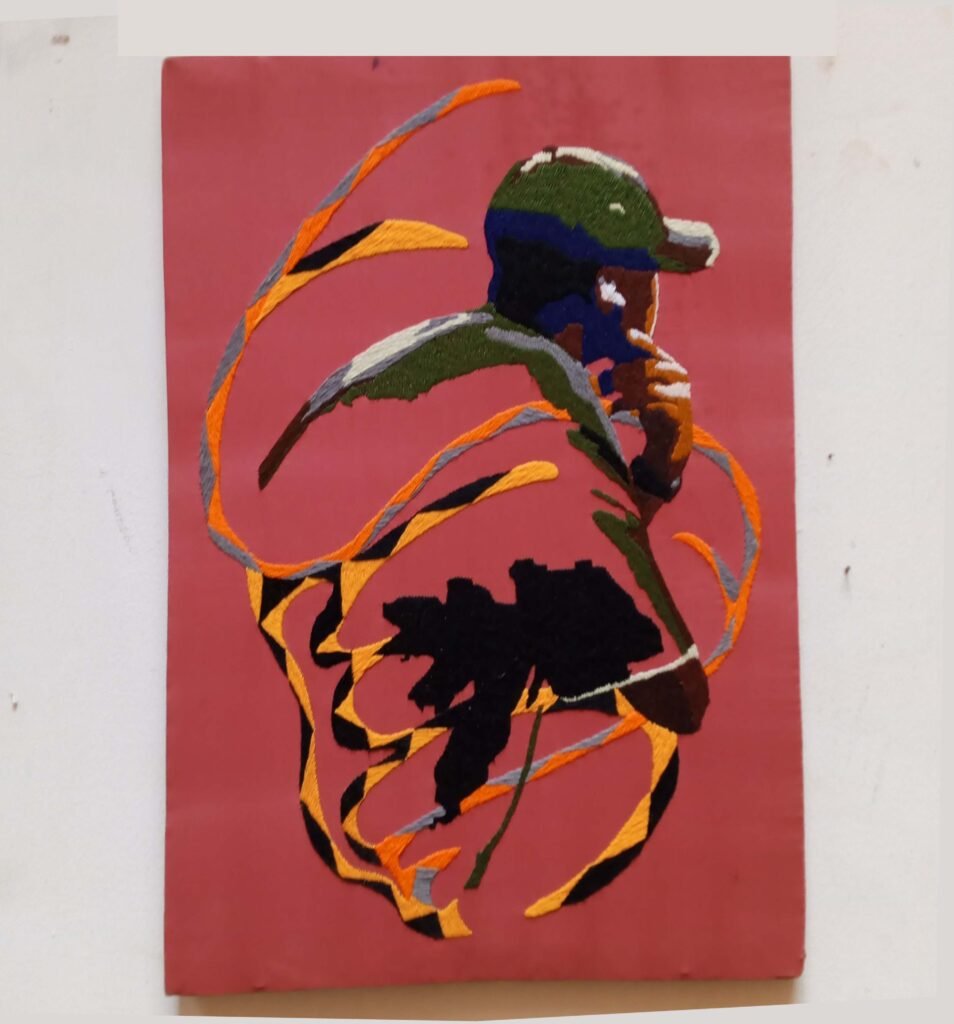
type: Non-conventional art
medium: Hand Embroidery on Canvas
size: 30 x 20 inches
year: 2024
Focused Despite Storms of Life
This piece is inspired by life itself. The constant presence of challenges, struggles, depression, and the many problems we face daily. Just as storms are unavoidable in nature, the storms of life are continuous and ever-changing, shaping our journey as we move forward.
On a personal and emotional level, the work reflects the inner battles we face when we give too much attention to our difficulties. When storms are allowed to dominate our thoughts, they drain our strength and deepen our misery. This piece represents the conscious decision to shift focus to acknowledge hardship without letting it define or defeat us.
The message encourages resilience and intentional focus. By feeding our storms less attention and using them as stepping stones rather than obstacles, we grow closer to our dreams. Viewers are invited to feel strength, hope, and determination to remember that storms do not have to win. Despite life’s challenges, we can still become who we choose to become.
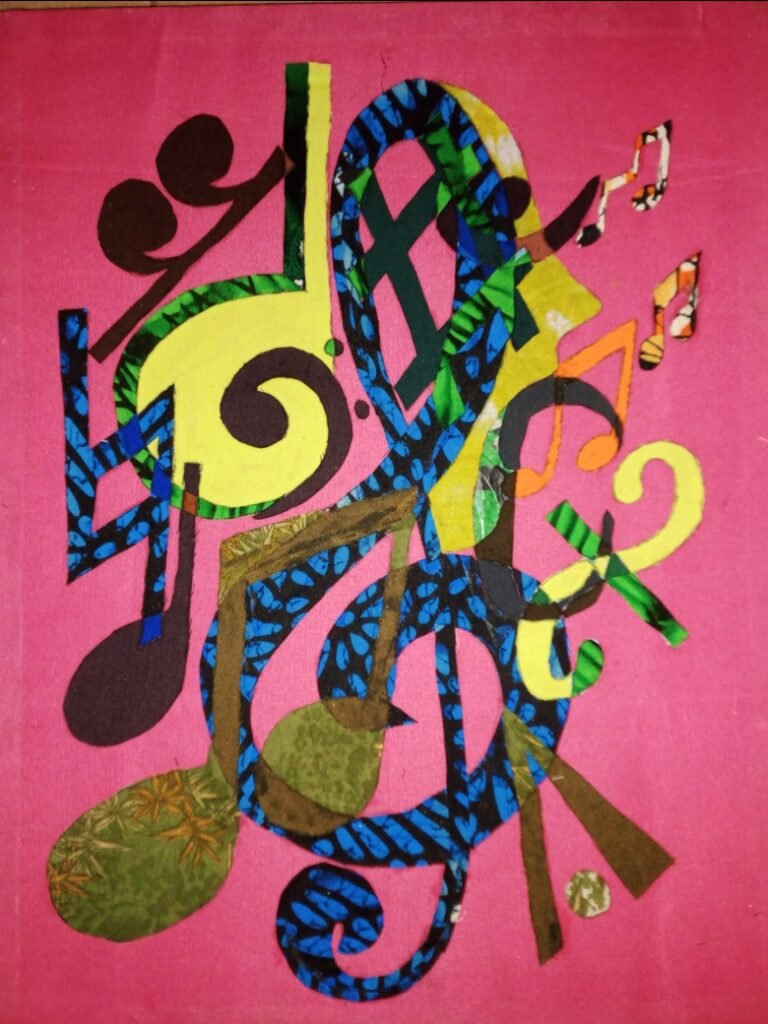
type: Appliqué
medium: waste fabrics on canvas
size: 18.5 x 14.5 inches
year: 2025
‘Tis Music in My Ear
‘Tis Music in My Ears is inspired by the invisible yet powerful relationship between sound and emotion. The artwork translates music into a visual language, where rhythm, harmony, and silence are expressed through form and texture. At its center, the treble clef rises with purpose, giving birth to the rest note, an origin point that reflects how music flows, pauses, and renews itself.
Music has long been a universal healer, transcending culture and circumstance. On a personal and emotional level, this piece reflects music as both refuge and resilience, a force that restores the spirit in moments of sorrow. While sadness may attempt to compete with music, it is ultimately music that endures, offering strength, balance, and emotional release.
The artwork invites viewers to feel comforted, uplifted, and understood. It speaks to the idea that without musical notes there is no melody, no expression, no essence. Viewers are encouraged to trust in music as a constant companion, one that listens, heals, and never yields to despair.
Created through appliqué using waste fabrics, each piece of material was intentionally chosen to echo a sound or rhythm. The layered textures symbolize musical vibrations, suggesting that every fabric holds its own voice. The use of reclaimed materials reinforces the idea of transformation, turning remnants into harmony, mirroring how music reshapes emotion into beauty. Every texture becomes a note, resonating with the sound that lives within.
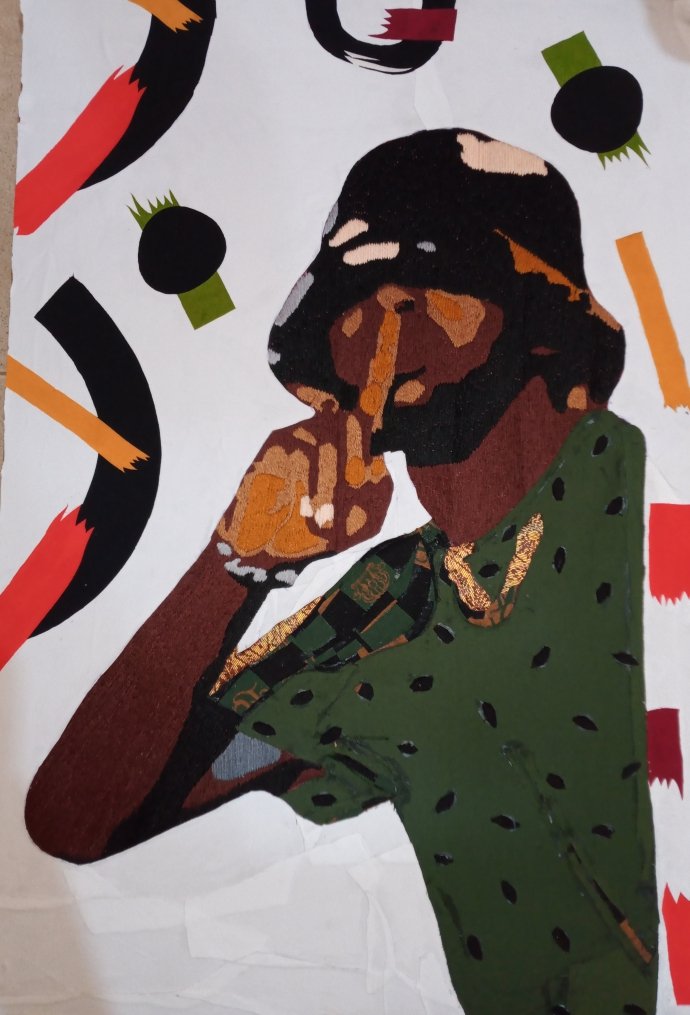
type: Mixed-media
medium: Hand Embroidery on canvas
size: 30 x 20 inches
year: 2025
Try Dey Keep Quiet (Pidgin)
Try Dey Keep Quiet is inspired by everyday life experiences where silence becomes a conscious choice rather than a weakness. Rooted in the wisdom of restraint, the piece reflects moments when walking away or choosing not to respond speaks louder than words. The title, expressed in Pidgin, grounds the work in familiar language and lived reality, making the message direct, relatable, and culturally resonant.
Culturally, the use of Pidgin emphasizes shared understanding and collective wisdom often passed through informal conversation. On a personal and emotional level, the artwork acknowledges the inner strength it takes to remain calm in challenging situations. It highlights emotional intelligence choosing empathy over ego, and understanding that our reactions can deeply affect others, even when our own feelings are overlooked.
The piece encourages viewers to embrace silence as power rather than submission. It reassures that keeping quiet or walking away does not signify foolishness, but rather self-respect, maturity, and wisdom. The work invites a sense of calm reflection, urging viewers to respond thoughtfully instead of impulsively.
Through hand embroidery and mixed-media, the slow, deliberate process mirrors the act of patience and restraint. Each stitched line represents careful thought before speech, reinforcing the idea that words like stitches leave lasting impressions. The tactile nature of the medium emphasizes intentionality, transforming silence into something visible, meaningful, and deeply human.
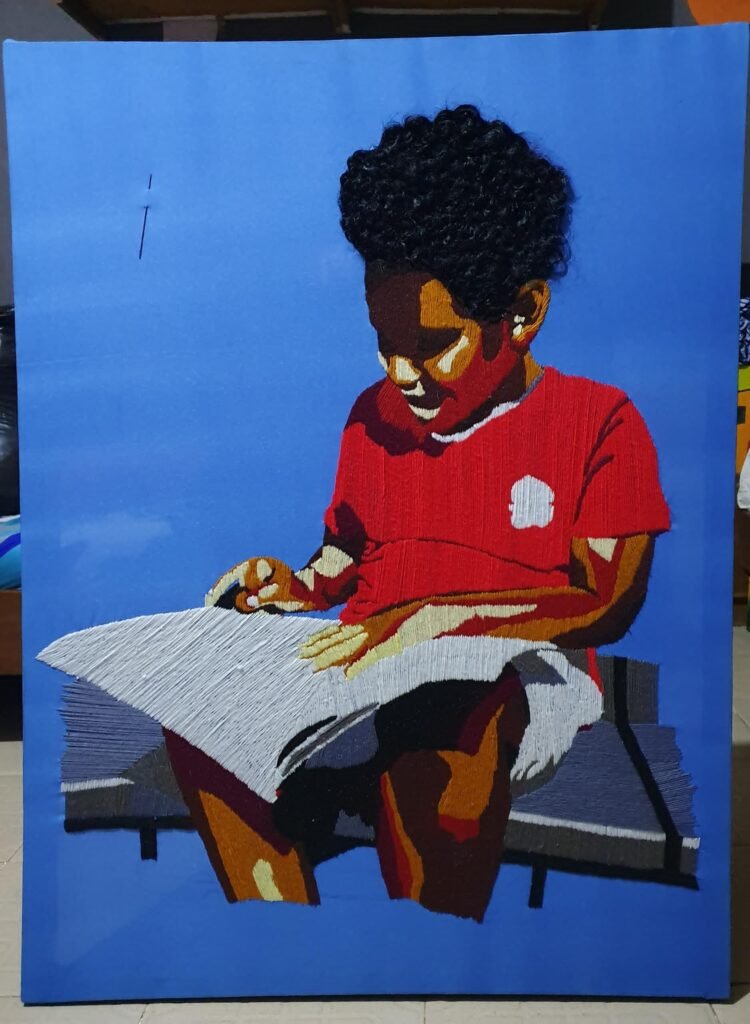
type: non-conventional art
medium: Hand Embroidery on canvas
size: 3 x 4 feet
year: 2024
Cradle Foundation
Cradle Foundation reflects the belief that a child’s education begins long before formal schooling — shaped through guidance, example, and consistency. Depicted through a quiet moment of reading, the work draws from spiritual wisdom, cultural values, and lived experience, echoing the biblical proverb, “Train up a child in the way he should go.”
Executed in hand embroidery, the tightly layered yarns form a linear, tactile texture that mirrors the gradual process of upbringing. Each stitch becomes symbolic — a lesson, a value, a habit patiently woven into a child’s life. The deliberate slowness of the technique reinforces the idea that education, like embroidery, is built over time and requires care, discipline, and commitment.
Within a Nigerian cultural context, the work resonates with communal responsibility and the popular reminder that education no be scam — affirming learning as a meaningful and transformative investment. The piece emphasizes that children learn not only from books, but from what they observe daily, reminding viewers that foundations are formed through both instruction and example.
On a personal and emotional level, the piece acknowledges the deep responsibility placed on parents, guardians, and society to nurture children not just with resources, but with integrity, discipline, and visible commitment to learning.
The artwork urges viewers to reflect on their role in shaping the next generation. It conveys that children learn as much from what they see as from what they are told. The piece encourages accountability, consistency, and intentional living, reminding viewers that readers become leaders, and that children read not only books, but also the lives of those who guide them.
Executed in hand embroidery, the slow and deliberate stitching process symbolizes patience, care, and long-term investment mirroring the process of educating a child. Each stitch represents a lesson, value, or example woven into a child’s foundation. The tactile nature of the medium reinforces the idea that upbringing, like embroidery, is built carefully over time and must be strong from the very beginning.


Artistic and Social Impact
Her impact lies in bridging gaps—between tradition and contemporary practice, sustainability and storytelling, material and memory, and Nigerian cultural heritage and global textile art—while building a thoughtful, enduring creative legacy.
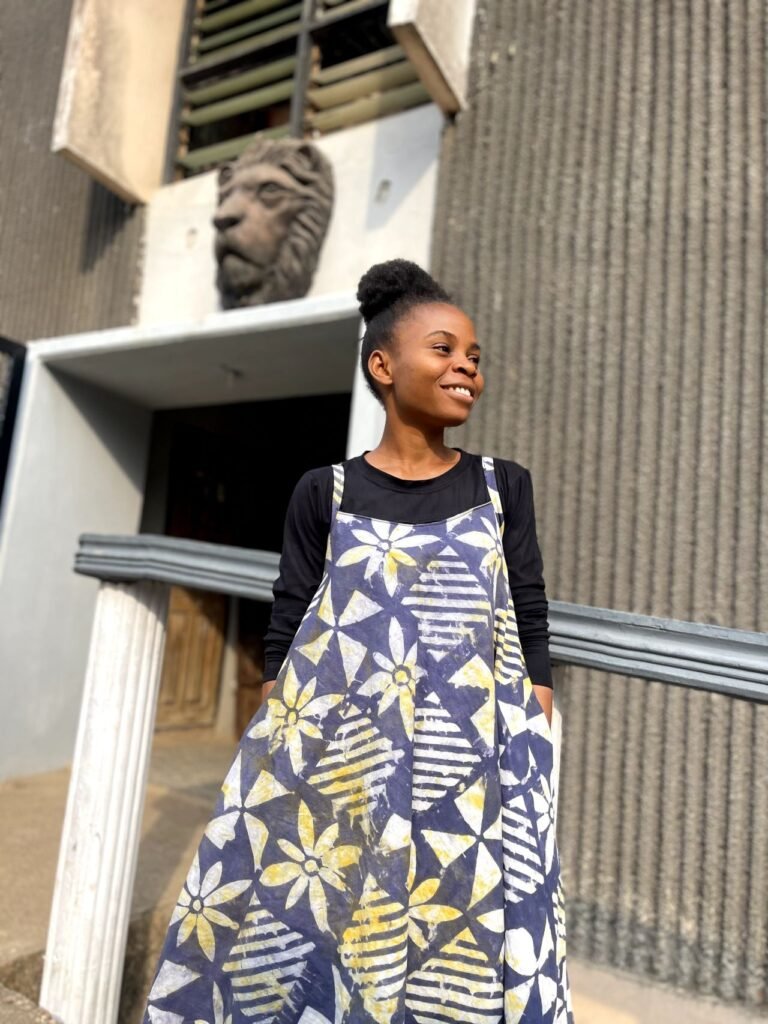
Reclaiming Indigenous Textile Knowledge
This project represents a hands-on engagement with Adire Eleko, a traditional Yoruba batik technique that uses cassava paste as a resist. As a first-time exploration, it reflects the importance of learning through doing—embracing imperfection as part of artistic growth. Beyond technical skill, the process reconnects contemporary creative practice with indigenous knowledge systems, affirming their relevance in modern art and fashion education.
By producing both the textile and the garment, the work highlights self-reliance, cultural continuity, and respect for local craftsmanship. It demonstrates how traditional practices can serve as powerful tools for creativity, identity formation, and cultural preservation when passed on through education and practice.
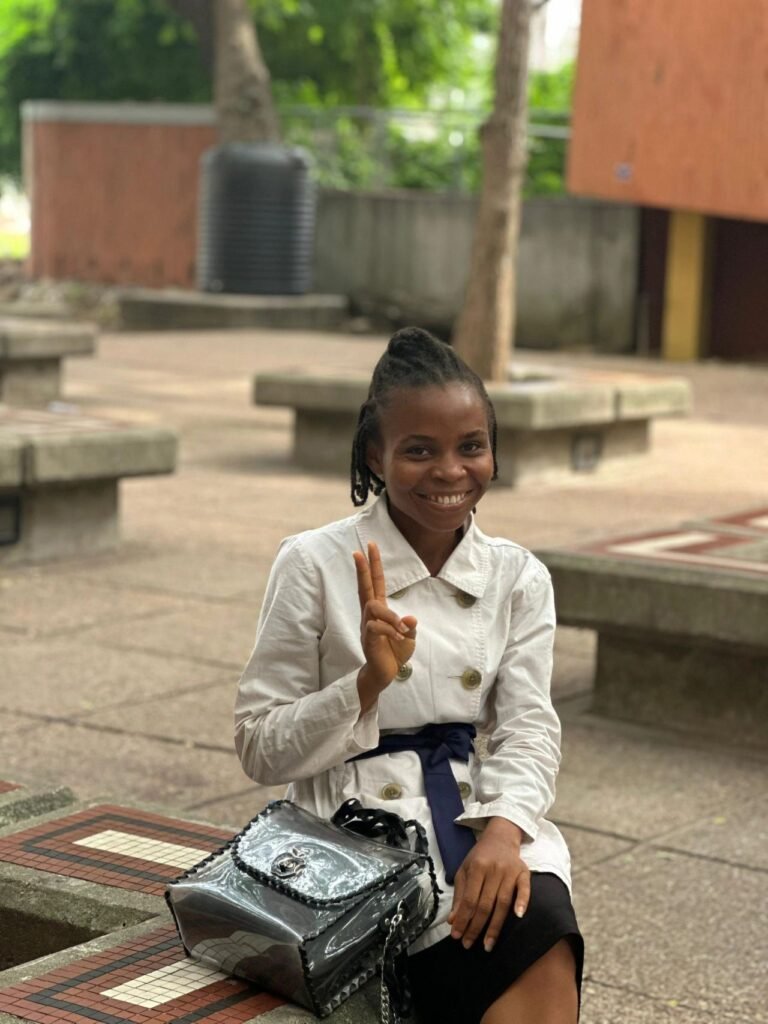
International Recognition
Being selected as a Featured Artist with Art in the Round marks a significant milestone—recognizing creative excellence, cultural integrity, and the power of art to travel beyond borders. it is an acknowledgment of artistic rigor, cultural relevance, and impact.
This recognition places Present within a global creative network that values indigenous knowledge, emerging voices, and socially grounded practice. It affirms that work rooted in local tradition can speak powerfully on international platforms, and that such voices deserve to be seen, supported, and archived within global art conversations.
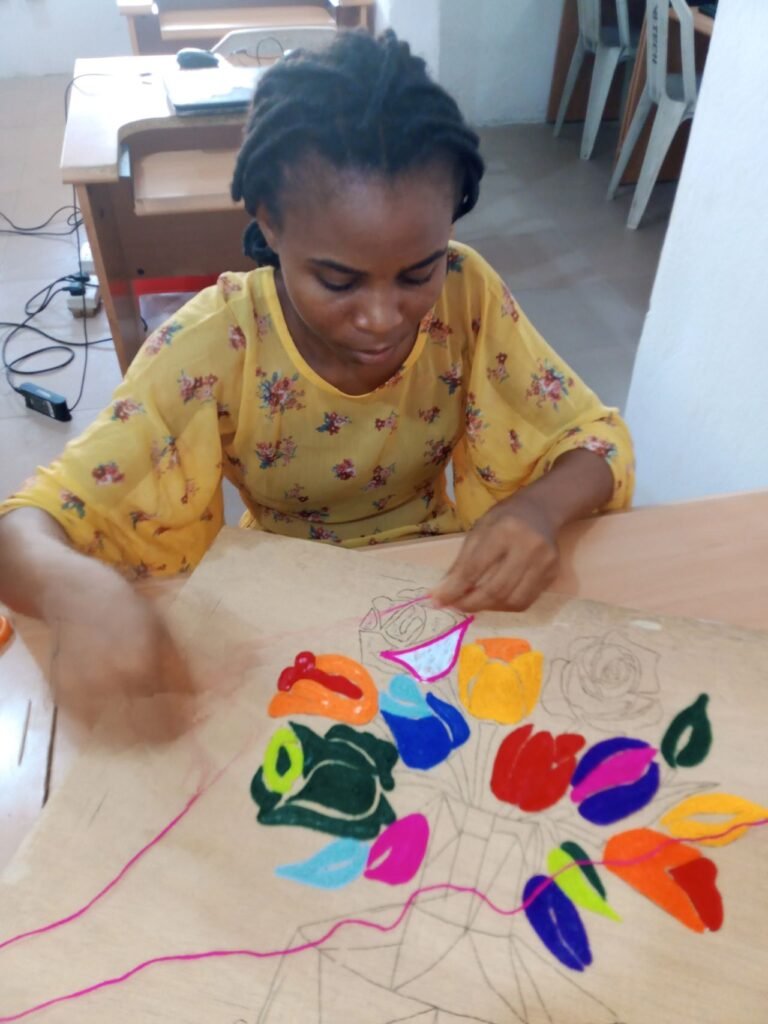
Sustainable Art Practice | Material Reuse & Environmental Responsibility
Through the intentional use of waste fabric, leftover yarns, and discarded textile materials, the artist transforms what is often overlooked into meaningful visual narratives. This sustainable approach reflects an ethical responsibility to both environment and culture, demonstrating how creative practice can reduce waste while generating value, meaning, and beauty.
By reworking existing materials, the artist challenges conventional ideas of production and consumption in contemporary art. The practice affirms that sustainability and artistic excellence are not separate paths, but interconnected processes—where care for materials mirrors care for stories, memory, and future generations.
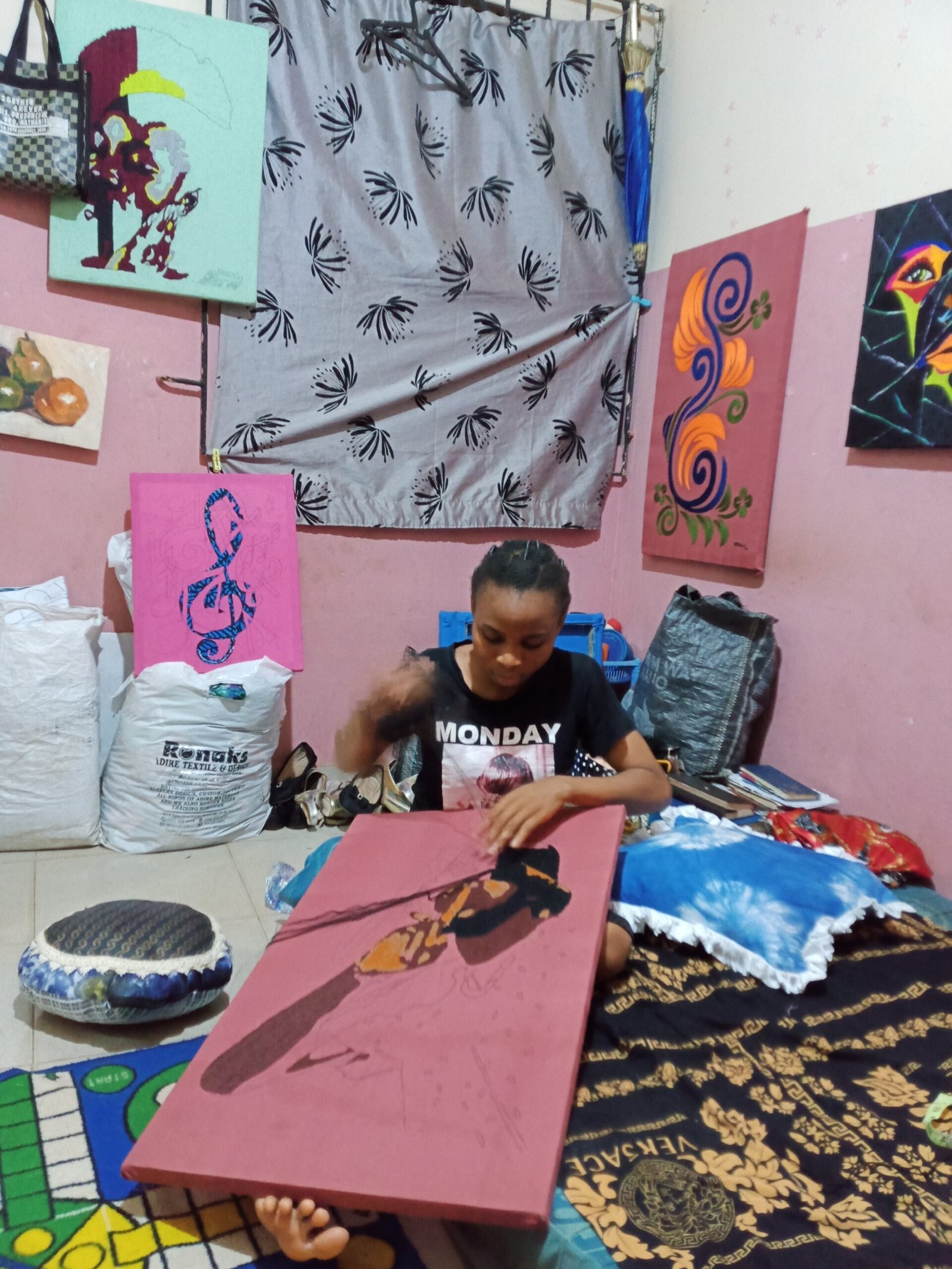
Save the Date: Live Artist Conversation
Join us for an inspiring live interview with Present Chinwe Onyebuchi as we explore her creative journey, philosophy, and featured works. Join us as she takes us behind the scenes of her creative world.
📅 Date: [to be published soon]
🔗 Join the Session: [to be published soon]